
Halne Fjellstugu: Unique stays in the heart of Hardangervidda
Nestled in the dramatic landscape of Hardangervidda, Halne Fjellstugu has welcomed guests for almost a century. Offering rustic stays and tailor-made…

Early autumn is ideal for hiking in Swedish Lapland, with shifting colours and fewer mosquitos. One of the world’s most famous hiking trails is located here, above the Arctic Circle. Stretching from Abisko to Hemavan, the King’s Trail is around 450 kilometres long – a satisfying challenge for newbie hikers and mountain veterans, who can get up close with the spectacular wilderness. Established by the Swedish Tourist Association (Svenska Turistföreningen, STF) at the beginning of the 20th century, the King’s Trail (Kungsleden in Swedish) passes scenic landscapes of Swedish Lapland, from dramatic high mountains to primeval forests, beautiful lakes and river deltas. The entire length of the…
Visitors to Finland might assume that the best way to experience the majestic landscape is by…
T he spectacular, untouched grounds at Jotunheimen make it a great destination for discovering…
North Karelia is truly a hidden gem. But despite it only being known only to a few savvy visitors,…
Back in June, Thy National Park opened the doors to its brand-new Thy National Park Centre, located…

Nestled in the dramatic landscape of Hardangervidda, Halne Fjellstugu has welcomed guests for almost a century. Offering rustic stays and tailor-made…


The best time of year in Gotland, Sweden’s own paradise island, is on the horizon. Before long, the crowds will be gone, the pace will slow down, the…

With its mild coastal climate, easy access to striking nature and a slower pace of travel, Southern Norway has long been a cherished summer…

Seeing the Northern Lights in Lapland features high on many travel bucket lists. At Nivunki Village in Muonio, close to the Arctic Circle in the far…

In Finland’s far northeast, where forests stretch uninterrupted for kilometres, lies Bear Kuusamo – the country’s northernmost bear-watching site.…

Set on a small, wooded island in Telemark, Norrøna Canvas Telemark feels less like a hotel and more like a thoughtfully orchestrated experience.…

In the heart of Setesdal, where the river Otra winds between pine forests and high mountain plateaus, lies the mountain village of Hovden. With…

In the Åland archipelago lies an oasis of calm: three private islands, perfect for conferences, celebrations and peaceful getaways. With personalised…

The King’s Trail stretches through some of Swedish Lapland’s most spectacular scenery, with lakes, birch forests and mountain landscapes making it one of Scandinavia’s great long-distance walking routes, particularly striking in the shifting colours of early autumn. Photo by Katja Kristoferson/Folio/imagebank.sweden.se.

Oulangan Taika opens the door to some of Finland’s most beautiful hiking country, with guided and independent routes through forests, hills, lakes and national parks that make the region an excellent base for Nordic walking and longer outdoor adventures. Photo by Oulangan Taika.

Jotunheimen offers some of Norway’s most spectacular walking country, with routes through lush valleys, mountain villages and high peaks making it an outstanding destination for everything from gentle Nordic walking to more demanding hikes. Photo by Ola Røssehaug.

Stockholm Adventures offers an easy gateway to the capital’s surrounding nature, with guided hikes through forest, wildlife areas and the archipelago showing how quickly Stockholm gives way to quieter trails and rugged Baltic scenery. Photo by Stockholm Adventures.

Åkulla Outdoor Resort offers a relaxed base for exploring Halland’s lakes, forests and rolling trails, combining outdoor activities with comfortable accommodation and making it an appealing choice for Nordic walking and nature-focused breaks. Photo by Åkulla Outdoor Resort.

Lund combines lively city life with easy access to the surrounding countryside, where forests, open landscapes and rural trails make it simple to add Nordic walking and nature excursions to a city break. Photo by Visit Lund.

Halne Fjellstugu offers a remote base in the heart of Hardangervidda, surrounded by vast mountain landscapes and open trails that make the area ideal for long walks, nature immersion and exploring Norway’s high plateau. Photo by Halne Fjellstugu.

Surnadal offers a rewarding mix of tranquil trails, mountain scenery and open valley landscapes, making it a strong base for Nordic walking as well as more demanding hikes through the surrounding Trollheimen region. Photo: Oda Halle.

29|2 Aurland offers a peaceful base in the heart of Norway’s fjord country, where historic farm surroundings, dramatic mountain scenery and views across Aurlandsfjord make it an inviting starting point for slow walks, longer hikes and nature-led adventures. Photo by 29|2 Aurland.

Sølvgarden Hotell og Feriesenter provides a comfortable base in the heart of Setesdal, where forested valleys, mountain scenery and traditional rural landscapes offer plenty of opportunities for Nordic walking, gentle hikes and longer outdoor excursions. Photo by Sølvgarden Hotell & Feriesenter.

Bear Kuusamo captures the wild character of Finland’s far northeast, where vast forests, wetlands and remote trails create an exceptional setting for Nordic walking and immersive outdoor experiences close to nature. Photo by Piritta Paija.

North Karelia offers some of Finland’s most rewarding walking landscapes, with forested hills, expansive lake views and the trails of Koli National Park creating a particularly scenic setting for Nordic walking and longer hikes. Photo by Visit Karelia.

Lakeland Bomba offers a peaceful introduction to Finnish Lakeland, where quiet towns, national parks and lake-filled landscapes create an inviting setting for relaxed Nordic walking and longer nature excursions. Photo by Lakeland Bomba.

Haltia – The Finnish Nature Centre offers an easy gateway to Nuuksio National Park, where forest trails, rocky paths and lakeside scenery make it an accessible place to experience Finnish nature and enjoy Nordic walking close to Helsinki. Photo by Finnish Nature Centre Haltia.

Nationalpark Thy offers one of Denmark’s wildest walking landscapes, where dunes, heathland, lakes and coastal forest create varied terrain for Nordic walking and longer hikes shaped by the North Sea. Photo by Rasmus Hjortshøj.

Iceland Untouched opens up some of Iceland’s most dramatic wilderness, where volcanic canyons, glaciers, rivers and remote highland trails create extraordinary terrain for Nordic walking and more adventurous hikes. Photo by Iceland Untouched.

Bluegate showcases the Faroe Islands at their most dramatic, with guided hikes through steep coastal landscapes, rugged cliffs and remote valleys offering unforgettable Nordic walking and hiking experiences above the North Atlantic. Photo by Andrei Antal Photography.

Explore Ilulissat offers a gateway to Greenland’s extraordinary Arctic landscape, with summer hiking along the Sermermiut trail and other guided experiences bringing visitors close to the ice fjord, tundra and traditional local life. Photo by Explore Ilulissat.

Colourful Nuuk combines Greenland’s vibrant capital with immediate access to mountains, fjords and coastal wilderness, making it a striking base for walking, hiking and outdoor adventures just beyond the city. Photo by Sermersooq Business Council.

Skaraborg offers varied walking country between lakes Vänern and Vättern, with forests, rolling hills, open fields and characterful small towns creating an easy mix of Nordic walking, countryside routes and cultural stops. Photo by Tobias Andersson/skaraborg.nu.

Ramundberget combines the mountain landscapes of Härjedalen with a wide range of outdoor activities, from hiking and trail running to paddling and cycling, making it a strong base for active Nordic walking holidays in a peaceful alpine setting. Photo by Ramundberget.

Top autumn experiences in Sweden captures the slower side of outdoor travel, where forest trails, quiet lakes and crisp seasonal landscapes invite long walks, relaxed Nordic walking and time to simply enjoy the scenery. Photo: Emmie Bolmstedt, imagebank.sweden.se
Nordic walking may have begun as an off-season training method for cross-country skiers, but today it is one of the most accessible ways to explore the outdoors. Using specially designed poles engages more of the upper body than ordinary walking, while the rhythm of the movement makes it equally suitable for a gentle countryside stroll or a challenging day on the trail.
Few parts of the world are better suited to it than Scandinavia.
From Sweden’s seemingly endless forests and Norway’s mountain valleys to Finland’s national parks and Denmark’s wild coastline, the Nordic countries offer an extraordinary variety of landscapes that can be explored on foot. Further north and west, Iceland, the Faroe Islands and Greenland add volcanic valleys, Atlantic cliffs and Arctic wilderness to the possibilities.
The Best Places for Nordic Walking in Scandinavia are therefore not necessarily dedicated Nordic walking centres. They are landscapes where walking with poles makes particular sense: long forest tracks, marked mountain trails, rolling coastal paths and open countryside where the journey itself is the attraction.
Over the years, Scan Magazine has explored many of these regions, meeting local guides, tourism organisations, accommodation providers and people whose lives revolve around the outdoors. Together, their stories reveal just how varied a walking holiday in the Nordic region can be.
Nordic walking in Sweden
Sweden is perhaps the easiest place to understand the appeal of Nordic walking. Forests cover much of the country, thousands of lakes break up the landscape, and a well-established network of trails makes it possible to walk almost anywhere from the far south to the Arctic north.
Sweden’s tradition of allemansrätten, or the right of public access, also gives walkers considerable freedom to experience the countryside responsibly.
Swedish Lapland and the King’s Trail
At the adventurous end of the spectrum is Kungsleden, the King’s Trail, one of Sweden’s great long-distance routes.
The trail stretches for roughly 450 kilometres between Abisko and Hemavan, passing mountains, forests, lakes, river valleys and some of Swedish Lapland’s most dramatic wilderness. Nobody needs to tackle the entire route: multiple access points make shorter sections possible, while mountain cabins provide natural stopping places along much of the trail.
For Nordic walkers, the gentler sections offer long days of rhythmic walking through expansive landscapes. The more mountainous stretches should be treated as serious hiking terrain, with weather, equipment and experience taken into account.
Nearby STF Saltoluokta provides another excellent gateway into the mountains, while places such as Sandsjögården show how easily walking can become part of a wider Lapland nature holiday.
Early autumn is particularly beautiful, when the vegetation changes colour and the summer mosquito season begins to recede.
Värmland: forests, lakes and gentler terrain
For a less demanding introduction, Arvika and the wider Värmland region offer a very different type of Swedish walking.
Here, forest tracks wind between lakes and small communities, with rolling rather than mountainous terrain. The landscape lends itself particularly well to Nordic walking because distances can be adjusted easily: a couple of hours beside a lake one day, a longer woodland route the next.
The area also suits travellers who want walking to be one part of an outdoor holiday rather than its sole purpose. Canoeing, cycling, swimming and simply spending time beside the water fit naturally around days on the trail.
Stockholm, Sörmland and the archipelago
One of Sweden’s great advantages is that wilderness can begin surprisingly close to the city.
Around Stockholm, Stockholm Adventures makes use of the capital’s remarkable natural surroundings, while the islands of the Stockholm archipelago increasingly offer connected walking possibilities.
South of Stockholm, the Sörmlandsleden trail system passes forests, lakes and open countryside, with sections accessible from towns and transport links. The picturesque town of Trosa provides another appealing base for combining walking with cafés, restaurants and coastal scenery.
For an international visitor, this can be one of the simplest ways to add Nordic walking to a city break: Stockholm one day, pine forest and Baltic coastline the next.
Gotland: walking beside the Baltic
Sweden’s largest island changes the scenery again.
Gotland combines open countryside, woodland, beaches, limestone landscapes and long stretches of Baltic coastline. Much of the terrain is relatively gentle, which makes it especially suitable for walkers who prefer distance and scenery to steep climbs.
The island is particularly appealing in late spring and early autumn, outside the busiest summer season. Quiet roads and paths connect villages, beaches and rural landscapes, while the historic town of Visby provides a contrasting base for exploring the island.
Halland and Åkulla
Near Varberg on Sweden’s west coast, Åkulla Outdoor Resort sits amid lakes and some of Halland’s most attractive beech forest.
This is classic Nordic walking territory: undulating paths rather than major mountain climbs, woodland tracks, lakeside sections and enough interconnected trails to create walks of different lengths.
It is also a good example of how Nordic walking does not need to mean wilderness in the extreme sense. Good food, accommodation and comfortable facilities can sit just as naturally alongside an active day outdoors.
Skåne and the Bjäre Peninsula
Southern Sweden extends the walking season.
Around Lund, countryside routes make it easy to escape the city, while the Båstad and Bjäre Peninsula area combines farmland, woodland, rolling hills and coastal scenery.
This is particularly good territory for Nordic walkers who want long, steady days rather than technically difficult routes. Spring arrives earlier here than in the north, and autumn often remains mild well into the year.
Nordic walking in Norway
Norway brings more vertical drama.
Fjords, valleys and mountains often make the terrain more demanding than in Sweden or Denmark, but the country also contains countless gentler routes where poles provide rhythm and stability rather than mountaineering support.
Jotunheimen: walking among Norway’s highest mountains
Jotunheimen is one of Scandinavia’s great mountain areas.
Norway’s two highest peaks, Galdhøpiggen and Glittertind, rise here, but visitors do not need to tackle major summits to experience the landscape. Valleys, lakes and a wide network of marked routes offer everything from easy outings to ambitious mountain days.
Mari Arnøygard Wedum, manager at Visit Jotunheimen, captures the appeal of the region perfectly:
“Jotunheimen is the most mountainous landscape in Norway, the ideal location for beautiful walks through lush valleys and high peaks.”
For Nordic walking, the lower valleys and established tracks are the obvious starting point. More challenging high-level routes move firmly into mountain-hiking territory, where appropriate footwear, clothing and experience become essential.
The village of Lom also provides a comfortable base from which to combine walking with food, culture and shorter excursions.
Hardangervidda: space on a different scale
The enormous Hardangervidda plateau offers an entirely different Norwegian experience.
Rather than steep fjord walls, much of the landscape feels open and expansive. Trails cross moorland, lakes and mountain terrain, creating a sense of distance that is difficult to replicate elsewhere.
Halne Fjellstugu provides a useful base in this landscape, allowing visitors to combine days outdoors with a traditional mountain stay.
For Nordic walkers, sections of the plateau can provide a wonderful feeling of continuous movement through open country, although weather conditions can change quickly and routes should always be chosen according to experience.
Surnadal and Trollheimen
For walkers looking beyond Norway’s most famous destinations, Surnadal provides access to the mountains of Trollheimen as well as fjords, valleys and gentler local trails.
The area is particularly attractive because different levels of walking exist close together. One day can involve a genuine mountain challenge; another can be spent on easier marked paths or strolling through villages and cultivated landscapes.
That range makes Surnadal suitable for groups in which not everyone wants the same level of exertion.
Aurland and Norway’s fjord country
Around Aurland, the landscape becomes recognisably fjord Norway: steep mountains descending towards deep water, historic farms and routes connecting settlements across dramatic terrain.
The 29|2 Aurland story illustrates the appeal of slowing down in this landscape rather than simply driving between viewpoints. Walking is one of the best ways to understand the scale of the fjords, whether following valley paths or venturing onto higher ground.
Further west, waterfall country provides more opportunities for combining short walks with spectacular natural landmarks.
Senja and Vesterålen
Northern Norway adds an Arctic dimension.
Senja is known for jagged mountains, beaches and dramatic coastal scenery, while Vesterålen offers a mixture of mountains, shoreline, fishing communities and open landscapes.
Walking here can feel much wilder than the distances suggest. Weather arriving from the Norwegian Sea can change rapidly, and even relatively short routes can produce extraordinary views.
For experienced Nordic walkers who enjoy coastal terrain and big scenery, northern Norway can be one of the most memorable parts of Scandinavia.
Setesdal and southern Norway
Not every Norwegian walk needs to involve exposed mountain ridges.
Setesdal and wider southern Norway offer forests, valleys, lakes and traditional rural landscapes that are often far more forgiving.
Sølvgarden provides one example of how visitors can base themselves comfortably within this environment.
For walkers new to Norway, the south can therefore provide an excellent introduction before attempting higher mountain regions.
Nordic walking in Finland
If one country has a particularly strong claim to Nordic walking, it is Finland, where the activity developed from summer training for cross-country skiers.
The landscape is almost perfectly suited to it: forests, lakes and an enormous network of recreational trails, often supported by excellent outdoor infrastructure.
Oulanka National Park and Kuusamo
The Kuusamo and Oulanka region is one of Finland’s great hiking destinations.
The famous Karhunkierros, or Bear’s Trail, passes rivers, rapids, forests, hills and canyons through Oulanka National Park. Shorter routes make the same scenery accessible without committing to the full long-distance trail.
Tommi Kallberg, owner of Finnish hiking-tour operator Oulangan Taika, highlights just how varied the country is for walkers:
“The network of hiking trails in Finland is vastly varied, so any visitor can find their dream location to explore.”
That variety is one of Finland’s great advantages for Nordic walking. Marked trails, rest areas and shelters make it comparatively easy to plan independent outings, while guides can open up longer and less familiar routes.
North Karelia and Koli
Eastern Finland offers some of the country’s most recognisable landscapes.
North Karelia combines forests and lakes with the elevated viewpoints of Koli, where wooded hills rise above Lake Pielinen. Trails around Koli National Park range from straightforward walks to longer, more challenging days.
For Nordic walkers, the combination of elevation and established paths creates enough variety to remain interesting without requiring Alpine-scale climbs.
The wider region also provides the classic Finnish ingredients: quiet forests, clear water and long periods where the loudest sound may simply be the wind through the trees.
Finnish Lapland
Further north, Finland opens into Lapland.
Features on Ilonka Farm and Café, Nivunki Village, Villa Usva and the region’s wilderness hotels show how deeply outdoor activity is woven into tourism here.
Summer and autumn bring hiking and long daylight hours, while the character changes completely in winter when snowshoeing and cross-country skiing take over many of the routes.
For Nordic walking, late summer and early autumn can be particularly rewarding. The forests begin to change colour, temperatures become cooler and vast areas remain remarkably quiet.
Finnish Lakeland
For something gentler, Lakeland Bomba and the wider Finnish Lakeland region offer forests and water in almost every direction.
Long forest tracks and lakeside routes make this ideal for steady Nordic walking without major elevation gain. It is also the sort of landscape where walking can easily be combined with sauna, swimming, paddling and relaxed days by the water.
For many visitors, this is perhaps Finland at its most archetypal.
Nuuksio and the Helsinki region
Nordic walking in Finland does not require a journey to the far north.
Haltia – The Finnish Nature Centre, on the edge of Nuuksio National Park, provides access to forests and trails within easy reach of Helsinki.
That makes the region particularly appealing for travellers who want to combine a capital-city visit with a genuine outdoor experience. A morning in Helsinki can be followed by an afternoon among forests, lakes and rocky trails.
Nordic walking in Denmark
Denmark offers perhaps the easiest terrain of all the Nordic countries.
There are no major mountains, but there are forests, beaches, dunes, heathlands and long coastal paths. For Nordic walking, flatter landscapes can actually be an advantage: the poles can be used rhythmically and efficiently rather than primarily for balance on steep ground.
Thy National Park and Denmark’s wild west coast
On the north-west coast of Jutland, Thy National Park contains some of Denmark’s wildest landscapes.
Dunes, heathlands, lakes, forest and the influence of the North Sea create a terrain that feels remarkably remote by Danish standards.
Else Østergaard Andersen, head of Thy National Park, describes the forces that have created this distinctive landscape:
“Everything you see in the park is shaped by sand, salt, the wind and the ocean.”
That is exactly what makes it such an interesting walking destination. Routes move between sheltered forest and exposed coastal terrain, with the landscape changing constantly according to weather and light.
Slettestrand and North Jutland
Further north-east, Feriecenter Slettestrand provides another good base for exploring Denmark’s coastal nature.
Here, walking can be combined with beach, forest and other outdoor activities. The relatively gentle terrain makes it well suited to beginners, families and walkers who prefer longer distances without difficult climbs.
Funen, Kerteminde and Svendborg
The island of Funen provides a softer interpretation of Nordic walking.
Around Kerteminde, coast, farmland and small communities create relaxed walking possibilities, while Svendborg gives access to the landscapes of southern Funen and its archipelago.
This is less about conquering wilderness and more about moving through a cultivated Nordic landscape: coastline, fields, woodland, villages and water.
Nordic walking in Iceland
Iceland changes the scale once again.
The country is less associated with Nordic walking specifically than Finland or Sweden, but its extraordinary network of hiking landscapes makes poles extremely useful.
South Iceland and the volcanic landscape
Features such as Iceland Untouched and Iceland Encounter reveal a country shaped by volcanoes, glaciers, rivers and dramatic geological formations.
Nordic walkers accustomed to forest paths should expect very different conditions here. Surfaces may be rocky or volcanic, weather can change rapidly and exposed terrain demands suitable clothing.
But for those comfortable with those conditions, walking provides something that sightseeing from a car cannot: time to notice the scale, silence and texture of the landscape.
Iceland beyond the famous circuit
One of the pleasures of exploring Iceland on foot is the opportunity to move beyond the busiest roadside attractions.
Smaller valleys, coastal areas and lesser-known trails can provide a completely different experience from the major Golden Circle stops. Using a specialist local operator can be particularly valuable where routes cross more remote terrain.
Nordic walking in the Faroe Islands
The Faroe Islands appear almost purpose-built for walking.
Eighteen mountainous islands rise from the North Atlantic, with villages connected historically by footpaths that cross green slopes and high passes.
Hiking above the Atlantic
Bluegate offers experiences built around the Faroe Islands’ wild landscapes, while 62N provides another route into the islands’ outdoor culture.
For Nordic walkers, the combination of slopes and poles can work extremely well, but conditions deserve respect. Rain, strong winds and rapidly changing visibility can transform an apparently straightforward route.
The reward is some of the most dramatic coastal walking anywhere in the Nordic region: cliffs dropping directly into the ocean, green mountains, waterfalls and isolated settlements appearing across narrow sounds.
Rather than attempting to cover large distances, the Faroes are ideal for choosing one well-planned walk each day and allowing the weather to dictate the pace.
Nordic walking in Greenland
Greenland sits at the adventurous edge of this guide.
Distances are vast, settlements are isolated and there are few roads connecting communities. Walking therefore becomes one of the most natural ways to experience the landscape once you leave the towns.
Ilulissat and Disko Bay
Around Ilulissat, trails provide views across one of the most extraordinary landscapes in the Arctic.
The town sits beside the Ilulissat Icefjord, and walking routes in the surrounding area allow travellers to experience the relationship between rocky terrain, tundra and enormous masses of ice.
The environment requires more preparation than a woodland Nordic walking trail in Sweden or Denmark, but poles can be extremely useful on uneven Arctic ground.
Nuuk and the Greenlandic wilderness
Around Nuuk, mountains rise almost immediately behind the city.
Scan Magazine’s Colourful Nuuk feature highlights the extraordinary proximity between urban life and wilderness here. Within a relatively short distance, walkers can move from Greenland’s capital into landscapes that feel almost completely untouched.
Greenland is not the place to improvise ambitious routes without local knowledge. But for experienced walkers – and those using local guides – it offers a scale of wilderness that is difficult to match anywhere else in the Nordic world.
What is the best time for Nordic walking in Scandinavia?
There is no single Nordic walking season.
In southern Sweden and Denmark, good walking can begin in early spring and continue far into autumn. Finland’s forests and lake regions are particularly appealing from late spring through September, while northern destinations often come into their own during the short but intense Nordic summer.
Autumn deserves special attention. In Swedish and Finnish Lapland, the landscape can turn red, gold and orange, temperatures are cooler and trails are often quieter than during peak summer.
Norway’s high mountain routes have a shorter snow-free season, and conditions should always be checked before setting out.
Iceland, the Faroes and Greenland require even greater respect for weather. Summer generally offers the greatest choice of routes, but conditions can still change rapidly.
Nordic walking or hiking?
The distinction matters less than it might seem.
Nordic walking is defined primarily by the technique of actively using poles to engage the upper body. On easy paths, this can turn an ordinary walk into a more complete workout.
As terrain becomes steeper and rougher, however, the activity naturally begins to resemble conventional hiking with poles.
That is particularly true in places such as Jotunheimen, Kungsleden, Iceland and Greenland. The landscapes are wonderful for walking, but nobody should choose a difficult mountain route simply because it appears in a Nordic walking guide.
The advantage of Scandinavia is that there is almost always an alternative. A region containing 2,000-metre peaks may also have gentle valley trails; an Arctic destination may offer short coastal paths as well as multi-day wilderness routes.
Why Scandinavia is made for walking
Perhaps the greatest attraction of Nordic walking in Scandinavia is not the exercise itself but the access it provides to landscapes that reward moving slowly.
Forests reveal more when crossed on foot. Fjords feel larger when approached along a trail rather than from a viewpoint. An island coastline becomes a sequence of changing bays and headlands rather than a collection of individual attractions.
And the Nordic outdoor tradition supports exactly this style of travel.
Shelters, mountain huts, marked trails and public access make walking unusually easy in many parts of the region. At the same time, destinations increasingly recognise that visitors are looking for quieter, lower-impact ways of experiencing nature.
Nordic walking fits naturally into that philosophy. It requires little infrastructure, works for a wide range of ages and fitness levels, and can be adapted from a short forest outing to a full walking holiday.
Discover more outdoor experiences across Scandinavia
The destinations highlighted here represent only part of the walking and outdoor experiences Scan Magazine has explored across the Nordic region.
From national parks and coastal trails to mountain villages, islands and wilderness retreats, our archive contains many more stories about places where nature remains central to the experience.
Explore the Scan Magazine archive for more inspiration on hiking, Nordic walking and outdoor adventures across Scandinavia and the wider Nordic region.
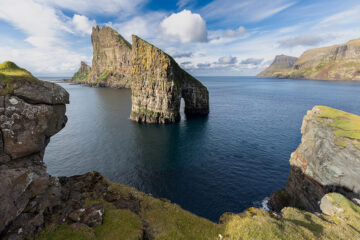
There are different ways of witnessing the stunning nature in and around this Nordic archipelago, from boat trips along dramatic coastlines, to…

Raw lava fields, erupting volcanos, vast glaciers, powerful rivers and serene valleys – the landscape of Iceland is one of mystery, adventure and, if…

Akulla Outdoor Resort is the perfect getaway for anyone looking for a space to reconnect with nature through all the activities it has to offer. The…
Are you a keen follower of Brand Scandinavia? Sign up to our newsletter now to stay up to date on all the latest Scandi trends, read celebrity interviews and get insider advice on the most cherished hidden gems.
