
Halne Fjellstugu: Unique stays in the heart of Hardangervidda
Nestled in the dramatic landscape of Hardangervidda, Halne Fjellstugu has welcomed guests for almost a century. Offering rustic stays and tailor-made…

Nestled in the dramatic landscape of Hardangervidda, Halne Fjellstugu has welcomed guests for almost a century. Offering rustic stays and tailor-made getaways in the Norwegian highlands, the team invites travellers to slow down, reconnect with nature and embrace a mountain way of life. Originally built in 1933 as a simple mountain farm offering overnight shelter for passing travellers, Halne Fjellstugu is rich in history and traditions. Over the years, the family-run business evolved into a dedicated inn known for comfortable lodgings and hearty meals. Halne entered a new chapter when Geirmund Tormodsgard and Ingar Dalen took over as owners in 2016. Over the past ten years, the pair have…
In the southern part of Finnskogen, near the Swedish border, the family-run accommodation PAN…
The story of Woodnest is a true love story. Almost from the moment Kjartan set eyes on Sally, he…
Set on a small, wooded island in Telemark, Norrøna Canvas Telemark feels less like a hotel and more…
For many, summer transforms the city into a sweltering concrete jungle filled with blaring noise,…

Nestled in the dramatic landscape of Hardangervidda, Halne Fjellstugu has welcomed guests for almost a century. Offering rustic stays and tailor-made…


In an era where luxury increasingly means space rather than spectacle, the most sought-after escapes are often the quietest ones. A new definition of…

Set on a small, wooded island in Telemark, Norrøna Canvas Telemark feels less like a hotel and more like a thoughtfully orchestrated experience.…

In the heart of Lofoten, where the mountains plunge into the Vestfjord, the historic fishing village of Ure has been reborn. Today, food, nature and…

Sick of the sweltering summers in the loud and crowded metropolis? Look to Lofoten, where Black Aurora Nook’s nature-centred design invites guests to…
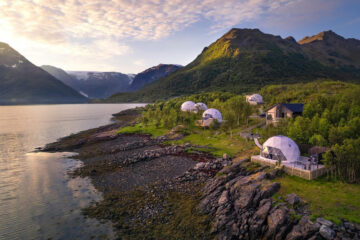
In Jøkelfjord, North of Norway, Isbreen the Glacier gives visitors an exclusive front-seat view of nature’s most dramatic performances: the blue and…
For many, summer transforms the city into a sweltering concrete jungle filled with blaring noise, heat-induced headaches, and swarms of tourists. If,…
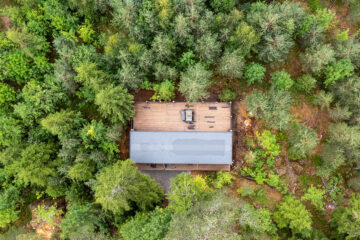
Most people like spending time in nature, but not everyone wants to sleep in a tent. Norwegian companies Omgi and Grend have solved the problem with…

Woodnest turns the childhood dream of sleeping in a treehouse into a refined retreat high above the Hardangerfjord. Floor-to-ceiling views, thoughtful design and a deep connection to the surrounding forest make it a striking place to slow down and take in the landscape. Photo by Tor Hveem.

Eagle Nest Eco Lodge rises 901 metres above sea level on Sershaugen, with sweeping views towards Rondane, Dovrefjell and Jotunheimen, while its dramatic architecture and panoramic glazing make the surrounding mountains and forest an integral part of the stay, creating a secluded retreat between landscape and sky. Photo by Eagle Nest Eco Lodge.

Hardanger Panorama Lodge rises 11 metres above the forest floor in western Norway, combining bold architecture with sweeping views towards Hardangerfjord and the surrounding landscape, creating a striking treetop escape where the accommodation itself becomes part of the experience. Photo by Hardanger Panorama Lodge.

TunheimsFjørå combines bold contemporary architecture with a dramatic fjordside setting in north-western Norway, where glass-fronted lodges appear to hover above the water and offer a secluded base surrounded by mountains, sea and changing Nordic light. Photo by meierntusenord.com.

Laagen offers a striking forest retreat designed to reconnect guests with nature, with its elevated Outside cabin blending almost invisibly into the surrounding trees and creating a calm, design-led escape deep in the Norwegian woodland. Photo by Christian Lunde.

NEST Kringlevann pairs contemporary Norwegian design with a peaceful lakeside setting just an hour from Oslo, where floor-to-ceiling windows open the cabin to the surrounding forest and water, creating a secluded retreat that feels both luxurious and deeply connected to nature. Photo by Paul Hughson and Mari Bareksten.

WonderInn combines compact, design-led cabins with peaceful natural settings, creating intimate escapes where forest, water and changing light become part of the experience, while the mirrored exterior helps the cabin blend into its surroundings. Photo by Pajurama.

Grend and Omgi combine sleek, eco-conscious cabin design with some of Norway’s most beautiful natural settings, creating secluded retreats where mirrored surfaces reflect the surrounding landscape and winter transforms the cabins into striking hideaways among snow-covered forests. Photo by Grend and Omgi.

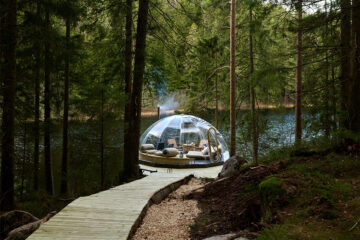
Hvilepust offers an immersive wilderness stay in transparent 360-degree domes surrounded by Norwegian forest and water. Designed to bring guests as close to nature as possible without sacrificing comfort, the secluded retreats provide a striking setting for quiet winter escapes, star-filled skies and snowy landscapes. Photo by Hvilepust.

Norrøna Canvas Telemark offers an intimate wilderness escape on a small wooded island, combining comfortable yurts with a wood-fired sauna, outdoor bathing and carefully curated food experiences. Surrounded by forest and water, it is a distinctive choice for travellers seeking a stylish, nature-led break in Norway. Photo by Norrøna Canvas Telemark.

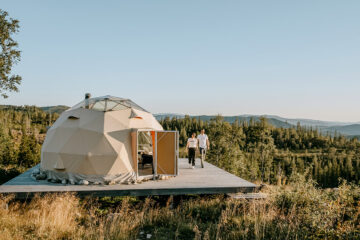
Arctic Dome offers a secluded glamping retreat in the Namdalen valley of northern Trøndelag, where a spacious geodesic dome sits amid unspoilt forest and mountain scenery, combining the simplicity of sleeping close to nature with the comfort of a thoughtfully designed private stay. Photo by Line Berre.

Isbreen the Glacier offers an extraordinary Arctic retreat in Jøkelfjord, surrounded by mountains, fjord scenery and the Øksfjordjøkelen glacier. Its distinctive luxury domes combine panoramic views with comfort and seclusion, creating a spectacular base for Northern Lights, winter landscapes and remote Arctic experiences. Photo by Isbreen The Glacier.

Konglehytta at Mjøsli turns compact living into a distinctive nature escape, with pinecone-inspired cabins combining warm Scandinavian interiors, sweeping windows and private saunas in a peaceful setting overlooking Lake Mjøsa. Photo by Bjørnar Fjeldberg.

29|2 Aurland offers a peaceful base in the heart of Norway’s fjord country, where historic farm surroundings, dramatic mountain scenery and views across Aurlandsfjord make it an inviting starting point for slow walks, longer hikes and nature-led adventures. Photo by 29|2 Aurland.

Ure Lodge sits in the historic fishing village of Ure in Lofoten, where centuries of maritime heritage, dramatic Arctic scenery and a deep connection to the sea create a distinctive coastal retreat far from the city. Photo by Ure Lodge.
Norway has always had a particularly close relationship with the cabin. For generations, escaping to a simple hytte in the mountains or forest has been part of Norwegian life – a way to leave the city behind, spend time outdoors and reconnect with nature.
Today, that tradition is being reinvented.
Across the country, architects, designers and independent hosts are creating a new generation of extraordinary places to stay: treetop cabins suspended among the pines, glass-walled retreats overlooking silent lakes, tiny architectural hideaways, wilderness domes and luxurious lodges designed to disappear into the landscape.
The Best Treetop Cabins and Unique Forest Stays in Norway combine the country’s extraordinary natural environment with some of the most imaginative accommodation in Scandinavia. Many are small-scale and privately run; others have been created in collaboration with leading architects and designers. What connects them is a desire to make nature the central part of the experience rather than simply the view outside the window.
Over the years, Scan Magazine has visited many of these remarkable Norwegian retreats. From the deep forests of eastern Norway and the lakes of Telemark to Hardangerfjord and remote mountain valleys, they demonstrate just how inventive the humble Norwegian cabin has become.
Sleeping among the trees in Finnskogen
Few properties capture the modern Norwegian treehouse experience better than PAN Tretopphytter.
Deep in Finnskogen near the Swedish border, the family-run retreat combines striking contemporary architecture with one of Norway’s great forest landscapes. Its award-winning cabins rise amongst the trees while providing the comfort of a carefully designed modern hideaway.
The concept deliberately works throughout the seasons. Winter can mean ice fishing and snowy forest landscapes, while warmer months open up opportunities for fishing, berry and mushroom foraging and exploring Finnskogen with or without a guide. Despite the sense of wilderness, the cabins are only around an hour from Oslo Airport – making them an unusually accessible way to disappear into Norwegian nature.
As co-owner Christine Mowinckel puts it: “Our visitors love the concept. Many have returned multiple times.”
PAN also captures something important about Norway’s new generation of nature accommodation. The objective is no longer simply to put a rustic cabin somewhere beautiful. Architecture, sustainability and the experience of the landscape are considered together, turning the accommodation itself into part of the reason for travelling.
A childhood dream above Hardangerfjord
Treehouses naturally appeal to a certain sense of nostalgia, but Woodnest takes the childhood fantasy and turns it into something altogether more sophisticated.
Located in Odda between Hardangervidda and Folgefonna national parks, Woodnest’s treehouses sit five metres above the ground with views towards the fjord. Created by Kjartan and Sally Aano together with Norwegian architects Helen & Hard, the cabins combine distinctive timber architecture with facilities more commonly associated with a boutique hotel, including a bathroom, shower, kitchenette and carefully finished interiors.
The story behind the project is almost as memorable as the buildings themselves. A shared childhood ambition to live in a treehouse eventually inspired Kjartan to build one in which to propose to Sally; from there, the idea grew into a family business.
That personal story, combined with some exceptional architecture, gives Woodnest an individuality that is difficult to manufacture. Guests are not simply staying somewhere unusual – they are spending the night inside somebody else’s rather ambitious dream.
A private retreat between mountain and sky
Not every unique Norwegian stay needs to be physically attached to a tree.
High above Gudbrandsdalen, Eagle Nest Eco Lodge takes the idea of seclusion to a dramatic extreme. Positioned 901 metres above sea level on Sershaugen near Otta, the lodge looks towards Rondane, Dovrefjell and Jotunheimen, with mountain and valley landscapes unfolding in almost every direction.
The architecture is designed to make those surroundings impossible to ignore. Large panoramic windows blur the boundary between interior and landscape, while local timber, slate and reclaimed elements connect the contemporary building to the traditions of Gudbrandsdalen.
There are no corridors, reception desks or busy communal spaces. This is a private retreat, designed for guests who value silence and space as much as conventional luxury. Outside, a hot tub overlooks the mountains; inside, the building feels warm, considered and deliberately connected to the place in which it stands.
It represents a particular strand of modern Norwegian travel: fewer rooms, fewer people and far more landscape.
Eleven metres above the ground in Hardanger
At Hardanger Panorama Lodge, the elevation is literal.
The family-run retreat in western Norway offers treetop accommodation 11 metres above the forest floor, with Hardangerfjord providing the wider backdrop. The cabins were designed and built by owner Arild Opheim, while Claudia Saathoff created the interiors.
The result combines the playfulness of a treehouse with a spectacular sense of scale. Guests are not simply among the trees but positioned high above the surrounding landscape, with the fjord and mountains forming a constantly changing panorama.
What could easily have become a novelty has instead been treated as a genuine design and nature experience. Privacy and silence are central to the concept, and the physical separation from everyday surroundings is part of what makes the stay distinctive.
Norwegian design in a hidden fjord
The area between Ålesund and Geiranger contains some of Norway’s most dramatic fjord landscapes, yet many visitors follow the same established routes. Kilsti Compact Lodge, working alongside outdoor-adventure company Ræin, offers another way to experience the region.
The concept combines stylish, compact accommodation with guided adventures into less-visited mountains and fjords. Rather than simply providing somewhere to sleep after sightseeing, the stay becomes part of a wider immersion in the landscape.
The philosophy also reflects a broader change in Norwegian tourism. There is increasing interest in moving visitors away from a small number of famous viewpoints and towards less crowded areas where nature can be experienced on a more intimate scale. Here, thoughtful accommodation, local knowledge and outdoor adventure come together in a way that feels particularly suited to Norway.
Luxury lodges that appear to float above the fjord
At Fiskå in north-western Norway, TunheimsFjørå approaches nature accommodation through architecture.
Designed by architect Stein Halvorsen, its lodges appear to project out over the landscape, making the fjord an almost permanent presence inside the accommodation. Guests can kayak or paddleboard directly into the surrounding water, walk in the nearby mountains and return to a private Jacuzzi overlooking the view.
The details are deliberately refined, but the objective is not to overpower the environment. The buildings were conceived to sit in harmony with their surroundings, with sustainability considerations incorporated into their operation, including the use of ocean water for heating.
Winter gives the place a different character again, with the dark fjord, changing weather and surrounding mountains creating a more dramatic interpretation of the same landscape.
Reimagining the forest retreat
In the Norwegian forest, Laagen has taken the familiar idea of escaping to a cabin and given it a contemporary architectural identity.
Opened to the public in 2020, the retreat emerged from a collaboration between Norwegian companies working across technology, outdoor experiences and compact living. Its goal was to create somewhere for good food, good sleep and creative thinking – surrounded by forest rather than urban distraction.
The accommodation includes a treetop cabin as part of a wider collection of nature-focused spaces. Norwegian design plays a central role, but so does simplicity. The luxury comes less from conventional hotel excess and more from the combination of architecture, comfort, quiet and direct contact with the surrounding woodland. It is an approach that feels distinctly Scandinavian: design is important, but its purpose is to make the experience of nature stronger rather than compete with it.
Architecture beside a quiet Norwegian lake
Just an hour from Oslo, NEST Kringlevann demonstrates how a single small building can become a destination.
The architect-designed cabin overlooks Lake Kringlevann and is dominated by floor-to-ceiling glass, allowing the surrounding landscape to become part of the interior. The entire front of the building can be opened, while warm furnishings and carefully chosen materials prevent the highly contemporary architecture from feeling cold or clinical.
Outside, a terrace and private Jacuzzi overlook the water, and a private jetty provides direct access to the lake.
This is not traditional cabin life in the old Norwegian sense, but it shares the same fundamental idea: leave everyday surroundings behind and spend time somewhere quieter. The difference is that modern architecture and high-end comfort have transformed the experience into something closer to a private design hotel for two.
Tiny spaces, big landscapes
One of the most interesting developments in Norwegian accommodation has been the rise of small, highly designed spaces.
Konglehytta at Mjøsli takes its name from its distinctive pinecone-like shape. Designed by Estonian company Iglucraft, the cabins use natural materials and traditional shingle techniques influenced by Nordic building traditions.
Their footprint may be compact, but the experience is deliberately generous. Private saunas and west-facing terraces look towards Lake Mjøsa, Norway’s largest lake, while the unusual architecture gives the accommodation an identity of its own.
Located only around half an hour from Oslo Airport, the cabins also demonstrate that a memorable nature stay does not necessarily require hours of travelling into the wilderness. The feeling of escape can come as much from the building and setting as from sheer geographical remoteness.
A new kind of Norwegian luxury
For WonderInn, luxury has relatively little to do with size.
Created after founders Jeremy Hermans and Erle Bjølgerud spent six months travelling in a converted van, the concept grew from the realisation that a small living space could feel extraordinary when placed in the right surroundings.
Today, WonderInn operates distinctive accommodation at several Norwegian locations. Its collection includes mirrored glass cabins, shepherd’s huts and glamping-style stays, each designed around a close relationship with the landscape.
That variety is part of the appeal. Rather than reproducing the same room in different destinations, the concept adapts itself to each location. Winter brings frozen landscapes and dark skies; other seasons create entirely different experiences around the same small spaces.
The result belongs to a new category of Scandinavian hospitality in which privacy, architecture and nature have become more important markers of luxury than the scale of a building.
A transparent room in the wilderness
Hvilepust takes the idea of bringing nature inside almost literally.
Its 360-degree transparent igloos are positioned in secluded locations across eastern Norway, allowing guests to remain visually connected to forest, water and sky while staying protected from the elements.
The locations are deliberately away from busy tourist areas. Rather than creating one large resort, the concept places individual accommodation in landscapes where privacy and solitude can become part of the experience.
It is easy to understand the visual appeal: waking beneath trees, watching changing weather from bed or seeing the night sky through transparent walls. Yet the strongest element is perhaps the simplicity of the idea. Architecture becomes almost invisible, leaving the surroundings to dominate.
Off-grid living on a wooded island
Somewhere between wilderness retreat, boutique accommodation and adventure camp sits Norrøna Canvas Telemark.
Set on a small wooded island in Telemark, the off-grid destination was created by Norwegian outdoor brand Norrøna and is built around yurts inspired by traditional Kyrgyz tents. Wooden bridges connect the structures, while forest trails begin directly outside.
The result feels less like a conventional collection of accommodation and more like a small temporary community hidden in the woods. Comfort is carefully considered, but nature remains the organising principle.
Guests move directly from breakfast into the forest, and the wider experience is shaped around outdoor activity, food and time spent within the landscape. For a company so closely associated with Norwegian outdoor culture, creating an actual destination feels like a natural extension of the brand.
Where traditional Norwegian heritage meets glamping
Unique nature accommodation in Norway is not solely about contemporary design.
At Arctic Dome Namdalen, a modern luxury dome sits within the historic setting of Råsetran, a traditional mountain pasture in Høylandet, northern Trøndelag.
The surrounding buildings date from the 18th and 19th centuries and have been carefully restored using traditional methods. The result is an unusual meeting of two very different forms of accommodation: contemporary glamping and a landscape shaped by centuries of Norwegian farming culture.
Guests booking the dome have the wider mountain-farm setting to themselves, making heritage as important to the stay as the building itself.
This gives the property a very different identity from a standard luxury tent placed in an attractive location. Here, the story of the landscape and the people who have used it over generations forms part of the experience.
When the accommodation becomes the destination
Norway is particularly well suited to this new generation of unusual accommodation because the country already has such a strong culture of escaping into nature.
What has changed is the architecture.
The simple cabin remains deeply embedded in Norwegian life, but alongside it has emerged an increasingly ambitious collection of treetop houses, tiny homes, wilderness lodges, domes and highly individual retreats.
The best examples are not unusual merely for the sake of being photographed. They work because their design strengthens the relationship between guest and landscape. Windows are positioned towards mountains and lakes. Buildings are lifted among the trees or tucked quietly into forest. Materials reference local traditions, and outdoor spaces are designed around everything from fire and saunas to long evenings beneath open skies.
Increasingly, travellers are seeking exactly this combination. The attraction is not necessarily a long list of hotel facilities, but the possibility of having somewhere extraordinary almost entirely to yourself.
Scandinavian simplicity meets contemporary architecture
Another reason Norway’s cabin renaissance is so visually distinctive is the country’s design tradition.
Timber remains an obvious material, but contemporary architects are using it in increasingly inventive ways. Large expanses of glass create an uninterrupted connection with the outdoors, while compact layouts prove that a relatively small footprint can still feel luxurious when every element has been considered carefully.
This is particularly effective in natural settings. A highly designed cabin does not require a large lobby, restaurant or formal reception area to make an impression. The forest, lake, fjord or mountain outside effectively becomes the communal space.
The best projects therefore feel less like miniature hotels and more like pieces of architecture created specifically for their location.
Forest, mountains, fjords and something completely different
The phrase “forest stay” only captures part of what is happening in Norway.
Some of the country’s most original accommodation is positioned beside fjords, on islands, high above lakes or within mountain landscapes. Yet the underlying philosophy is remarkably consistent: smaller-scale accommodation, strong architecture, privacy and a much closer connection with the outdoors.
That allows a holiday to revolve around the place itself.
A morning might begin with coffee overlooking a lake rather than a hotel breakfast buffet. A sauna may sit beside the forest instead of inside a spa complex. Evening entertainment can simply mean watching weather move through the valley or seeing stars emerge above the trees.
These experiences are simple in concept, but increasingly sophisticated in execution.
Discover more extraordinary places to stay in Norway
The properties highlighted here represent only a selection of the unusual accommodation Scan Magazine has discovered across Norway over the years.
Our archive contains many more stories about distinctive cabins, wilderness retreats, design-led accommodation and remarkable places to stay throughout the country.
Explore the Scan Magazine archive to discover more unique stays in Norway – from secluded nature retreats and architectural cabins to memorable accommodation hidden among the country’s forests, mountains and fjords.
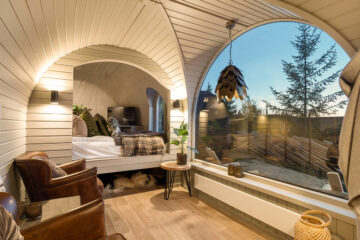
For travellers who love small and distinctive spaces, the Konglehytta cabins at Mjøsli in picturesque Strandlykkja are an experience that can’t be…
In Jøkelfjord, North of Norway, Isbreen the Glacier gives visitors an exclusive front-seat view of nature’s most dramatic performances: the blue and…
Tucked away in the lush valley Namdalen in the north of Trøndelag, you’ll find a luxury tent in historic surroundings. Surrounded by the unspoiled…
Are you a keen follower of Brand Scandinavia? Sign up to our newsletter now to stay up to date on all the latest Scandi trends, read celebrity interviews and get insider advice on the most cherished hidden gems.
