
Kultasepät Narsakka: Crafting custom jewellery across generations
Since 1947, Narsakka has been a labour of love for a whole family. After learning his craft from Finnish master goldsmiths, Helge Narsakka…

Since 1947, Narsakka has been a labour of love for a whole family. After learning his craft from Finnish master goldsmiths, Helge Narsakka established his own workshop, beginning a legacy of exquisite gold and diamond jewellery that has continued for four generations. Today, the Narsakka workshop is located in the charming city of Hämeenlinna, where the family continues to design and create fine jewellery. The Narsakka boutique is a destination for anyone wishing to discover a broad and varied collection of gold and precious stone jewellery. Passed down through the family, Helge trained his three sons, Osmo, Timo and Kai, in the goldsmith profession. Two of them spent time in Sweden…
Jewellery has been a passion for Sanna Puhakka since she was 16 years old. From her first summer…
Tammi Jewellery combines masterful artisan skills, careful finishing, and recycled fine silver and…
Born from a desire to find the perfect pair of earrings, Mimo Design creates jewellery inspired by…
Nordic design is known for simplicity, quality and quiet confidence. Through its carefully curated…

Since 1947, Narsakka has been a labour of love for a whole family. After learning his craft from Finnish master goldsmiths, Helge Narsakka…


Nordic design is known for simplicity, quality and quiet confidence. Through its carefully curated online store, Finnish boutique W Design brings…

Jewellery has been a passion for Sanna Puhakka since she was 16 years old. From her first summer job in Finland, Puhakka knew she wanted to be a…

With its bold, playful use of asymmetry and colour, intricate handcrafted designs and a philosophy rooted in joy, Au3 Goldsmiths is redefining how…
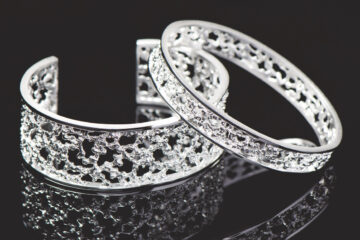
Tammi Jewellery combines masterful artisan skills, careful finishing, and recycled fine silver and gold. The biggest source of inspiration comes from…
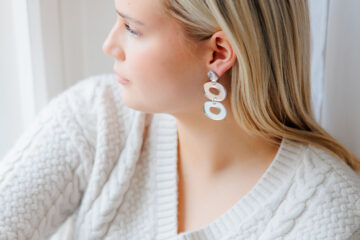
Born from a desire to find the perfect pair of earrings, Mimo Design creates jewellery inspired by architecture and nature in a range of different…

Delicate earrings, solid rings of gold and silver, and pendants highlighting nature found in the Arctic – these are a few of the pieces lovingly…

In the realm of sustainable fashion, the small Finnish jewellery company My Favorite Piece is a shining example of the possibilities of eco-conscious…

Au3 Goldsmiths brings colour, craftsmanship and personality to Finnish fine jewellery, with made-to-order rings and gemstone designs created to be worn, loved and passed on. Photo by Au3 Goldsmiths.

Tammi Jewellery brings Finnish nature to life in beautifully handcrafted silver and gold, with sculptural textures and timeless designs made to be worn and treasured for years. Photo by Tammi Jewellery.

TIRA Jewellery combines the artistry of traditional hand-engraving with contemporary Finnish design, creating intricate rings and bespoke pieces with a strong sense of craftsmanship and individuality. Photo by TIRA Jewellery.

TIRA Jewellery keeps the rare art of hand-engraving alive, creating highly personal rings and bespoke pieces where traditional Finnish goldsmithing meets contemporary design. Photo by Christina Biasi Photography.
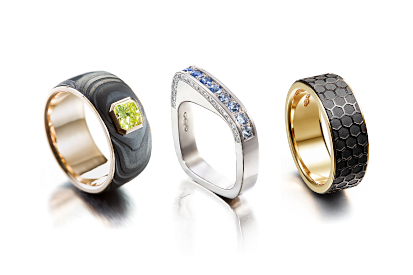
Petri Pulliainen creates striking Finnish wedding rings for those looking beyond conventional luxury, combining technical precision with unusual materials, bold forms and distinctive gemstone settings. Photo by Mikael Pettersson.

Korunilo captures the spirit of the Arctic in delicate gold and silver jewellery, blending Nordic craftsmanship with nature-inspired details that feel both distinctive and easy to wear. Photo by Korunilo.

WOWO vibes turns colourful gemstones into jewellery made for meaningful moments, with delicate Finnish designs that are easy to personalise, gift and wear every day. Photo by WOWO Vibes.

OJL Originals creates Finnish fine jewellery designed to mark life’s milestones, combining colourful gemstones, distinctive forms and pieces that can be mixed, matched and built into a story of their own. Photo by OJL Originals.

My Favorite Piece turns unexpected recycled materials into colourful Finnish jewellery, creating playful statement pieces that prove sustainable design can be just as distinctive as it is responsible. Photo by My Favorite Piece.

W Design curates jewellery and accessories with a distinctly Nordic point of view, bringing together elegant pearls, gold tones and contemporary pieces that are easy to layer, style and make your own. Photo by Anni Lu.

It all started from Lake Saimaa, whose colours, light and landscapes continue to inspire Never Too Lake’s distinctive Finnish jewellery. Photo by Never Too Lake.
Finnish jewellery has a character of its own. Gold and silver sit alongside birch plywood, recycled plastic, steel and coloured gemstones; traditional hand-engraving survives alongside three-dimensional modelling; and ideas can come from a Lapland snowflake, the shores of Lake Saimaa, an old lace pattern or a handful of discarded pistachio shells.
What connects many Finnish jewellery brands and designers is not one particular look, but a close attention to materials and making. There is a strong tradition of goldsmithing, yet also a willingness to experiment. Nature is ever-present, but rarely in quite the same way twice. And even highly decorative pieces tend to be designed with the expectation that jewellery should be worn rather than kept for special occasions.
From some of Finland’s best-known design houses to independent goldsmiths and younger studios, the country offers a jewellery scene with considerably more range than first meets the eye.
A Finnish jewellery tradition with deep roots
For many Finns, Kalevala is inseparable from the country’s jewellery history. Founded in 1937, the company originally took inspiration from historic Finnish jewellery and has since developed into one of the country’s most recognisable design names. Its jewellery continues to be made by hand in Helsinki, where traditional goldsmithing sits alongside modern production techniques. Kalevala’s collections move freely between history and contemporary design, with silver, bronze and gold used in pieces by generations of Finnish designers.
Lumoava represents another substantial strand of Finnish goldsmithing. Its roots stretch back to a workshop established by goldsmith Eino Räsänen in 1942. More than 80 years later, Lumoava still makes its jewellery in Finland, with recycled sterling silver and gold at the centre of the collections. The designs themselves range from restrained everyday pieces to more expressive sculptural forms, but the continuity of Finnish manufacture is an important part of the brand’s identity.
Then there is Aarikka, founded by designer Kaija Aarikka in 1954 after she began making buttons because she could not find the ones she wanted for a garment she had designed. Jewellery soon followed. The round wooden beads and strong colours that became Aarikka signatures offer a very different interpretation of Finnish design from conventional precious-metal jewellery. Much of the jewellery is still assembled by hand in Finland, and wood remains central to the brand more than seven decades after its foundation.
The longevity of these companies is important. Finland’s contemporary jewellery scene did not appear in isolation: it grew out of a culture in which design, handicraft and everyday objects have long been taken seriously.
Tammi Jewellery adds another chapter to that history. Goldsmith Alpo Tammi established the Turku company in 1954, and current owner Miia Saarikko took it over in 2014. Its pieces are made in Finland from recycled fine silver and gold, with much of their character created through hand-shaping and hand-polishing.
The Archipelago collection takes its cues from the water, rocks, forests and changing light around Turku, while other designs draw on orchid leaves, oak trees and even the shape of a drop of wine. The references are often subtle; what comes through most strongly is the surface of the metal itself, with smooth and ridged areas used to give the pieces depth and movement.
Goldsmithing where the hand still matters
Traditional craft remains remarkably visible among Finnish jewellery designers, even when the finished work is thoroughly contemporary.
At Helsinki-based Au3 Goldsmiths, founded in 2003 by goldsmiths Tero Hannonen and Jussi Louesalmi, coloured stones play a particularly important role. Louesalmi’s Keto Meadow ring, which won Finland’s Most Beautiful Ring of the Year competition in 2017, scatters sapphires and diamonds across the band in a composition inspired by a wildflower meadow. The original ring has since developed into a wider collection of rings, earrings and necklaces.
Much of Au3’s jewellery is made to order. Recycled 18-carat gold and platinum are used alongside responsibly sourced gemstones, while customers can also have pieces serviced so that they continue to be worn over time.
Louesalmi’s view of jewellery is refreshingly straightforward:
“Beauty belongs in the everyday.”
In Kuopio, TIRA Jewellery is keeping alive a skill that has become considerably less common: hand-engraving. Designer Minna Meskanen works with master hand-engraver Kari Puustinen, combining the technique with modern methods such as three-dimensional modelling.
The studio is especially known for bespoke engagement and wedding rings, where engraved leaves, textures and gemstones allow for an extraordinary level of detail. Customers also arrive with inherited jewellery to be reworked into something they can wear themselves.
“All gold has a story,” Meskanen says. For a piece made from a grandparent’s ring, that story can literally continue in a new form.
Reworking existing jewellery is also central to goldsmith Sanna Hytönen, whose workshop is based near Jyväskylä. Hytönen uses traditional methods rather than large machinery and makes custom jewellery as well as carrying out repairs. Old gold and silver can be melted and reshaped, while even something as ordinary as a bent silver coffee spoon can become a ring. As a gemmologist, Hytönen also brings specialist knowledge of stones to her work.
Petri Pulliainen approaches craftsmanship from a more technical direction. His Helsinki workshop became particularly known for unconventional wedding rings and for working with materials that are considerably harder to handle than traditional gold. Diamonds have been set into stainless steel, while Damascus steel, oxidised zirconium and coated steel have all appeared in his work. Precision rather than ornament for its own sake gives these rings their character.
On Finland’s west coast, Goldsmith Laiho connects jewellery with one of Rauma’s oldest craft traditions. The town is famous for lace-making, and Petri Laiho continues a local jewellery tradition in which the fine structures of lace are translated into precious metal. The result is an unusual meeting of two crafts: delicate patterns preserved in a material that can last for generations.
From Lapland snow to Lake Saimaa
Nature appears so often in Finnish jewellery that it would be easy to reduce it to a cliché. The interesting part is how differently designers use it.
For Sanna Puhakka of Korunilo, it is closely tied to her life in Arctic Finland. A trained goldsmith, she works particularly often in silver, using its brightness and reflective surface in pieces inspired by the north. Snowflakes are central to her Arctic Flower collection, where the slight differences produced through making by hand mean that individual pieces do not become completely identical.
“The nature of Lapland is so calming. I’m proud of my homeland and want to showcase it,” Puhakka says. That relationship with place has travelled surprisingly well: Korunilo’s jewellery is bought not only in Finland but by customers elsewhere in Europe and beyond.
Some 500 kilometres further south, Lake Saimaa provides the starting point for Never Too Lake. Designer Sanni Poutanen founded the company in 2019 and turns her own drawings and photographs into colourful jewellery made from Finnish birch plywood and stainless steel.
The lake itself is only part of the visual world. Flowers from her parents’ garden have also found their way into the designs, bringing strong colours and patterns into the collection. Never Too Lake has subsequently appeared in international publications including Vogue, Vanity Fair and House & Garden, showing how a very local source of inspiration can travel far beyond Finland.
Oulu-based Mimo Design began with a much more practical frustration. Founder Anu Sederholm could not find the earrings she wanted, so she started experimenting with making them herself.
Architecture and nature now feed into lightweight designs in a wide range of forms and colours, all handmade in her Oulu workshop with materials sourced from local producers. The jewellery catches the light deliberately, giving it a livelier expression than the monochrome palette often associated with Finnish design.
Nikama Design takes inspiration in another direction altogether. Working with surgical stainless steel, the Oulu company developed methods for forming a material that is notoriously difficult to manipulate by hand. The shapes were inspired by the vertebrae of the human spine, resulting in jewellery that combines an industrial material with forms taken directly from the body.
Colour, symbolism and jewellery with a personal story
Finnish jewellery is often at its most interesting when designers allow personality to override convention.
WOWO vibes was created by three sisters, with Riikka Nykänen designing and making the jewellery. Gemstones are central to the collection, both for their colours and for the personal associations customers attach to them.
Its Zodiac necklaces are among the brand’s most popular designs, while customers can also choose combinations of stones connected with children, friends or significant moments. Nykänen originally began making jewellery for occasions in her own life, including a gemstone piece she wore during childbirth. That idea of attaching a memory or meaning to a piece has remained part of the business as it has grown.
Personal stories also sit at the heart of OJL Originals. Second-generation jeweller Olli Johan Lindroos developed collections that allow rings to be combined and added to as the wearer’s life changes. The LUMI, SADE and KIDE collections take their names from the Finnish words for snow, rain and ice crystal, while the COLORS OF FINLAND collection began with a group of pastel sapphires Lindroos found in Antwerp.
Technology is part of the process – Lindroos works with three-dimensional design – but the purpose remains highly personal: a piece of jewellery that can mark a particular event and later be expanded to represent another.
There is a similarly narrative quality to Nikkotakko, created in Turku by Katri Juva. Finnish wildflowers and butterflies mingle with influences from India and Buddhist traditions. The brand’s mala beads follow the traditional format of 108 beads used in meditation, while other designs incorporate colour, natural imagery and symbolism around change and continuity.
And then there is Silvart, where jewellery has no interest in taking itself too seriously. Jenna Silvander works with brightly coloured polymer clay, creating pieces inspired by sweets, forest animals, blueberries and the everyday life around her in Lohja. It is playful Finnish design in the literal sense, but grounded in practical considerations about how accessories are actually used.
New life for old materials
A concern with materials runs through Finnish jewellery at every price point, and some designers have made reuse the starting point rather than an afterthought.
For My Favorite Piece, the story began when founder Jonna Tiitinen dropped a bag of pistachio shells on the floor. Their smooth, hard surfaces suggested that something normally thrown away might make an interesting material.
Painted nutshell earrings became the first product. Since then, discarded leather and plastic bottles have also been turned into jewellery, with Tiitinen deliberately working against the idea of accessories as short-lived fashion. The pieces are colourful and delicate enough that their origins are not necessarily obvious – which is precisely what makes the transformation interesting.
Upcycle with Jing starts with plastic bottles and ends with flowers, butterflies and other elaborate forms. Founder Jing Wang studied applied art and design in Finland before developing her own methods for cutting and assembling discarded plastic into jewellery.
The process is labour-intensive and largely done by hand. Wang has built a small production team while continuing to oversee design and quality herself, and the floral forms make the source material almost disappear in the finished pieces.
The same principle appears in a quieter form elsewhere. Tammi works with recycled precious metals; TIRA remakes inherited gold; Au3 recycles metal left over from production; and Sanna Hytönen regularly gives old jewellery a different life.
In Finnish jewellery, sustainability is therefore not one single aesthetic. Sometimes it is visible immediately; sometimes it is simply part of how a ring or pendant came to exist.
When jewellery becomes art
For Helsinki-based Meira Rauta, the boundary between jewellery and sculpture is deliberately porous.
Rauta has worked as a jewellery maker and artist since 2008 and often begins a new piece through the physical experience of the material itself. Copper, silver, wood and other materials are handled, tested and allowed to influence the eventual form.
Her Portti22 series reached the final ten in Finland’s Jewellery of the Year 2022 competition, while other work moves much further away from conventional jewellery. The sculptural Aloe, for example, was conceived as an object as much as something to wear. Rauta has even created jewellery from ice, requiring temperatures of around minus 20 degrees Celsius and accepting that the work will exist only briefly.
It is an extreme example, perhaps, but it captures something important about Finland’s jewellery culture. The country’s makers are comfortable moving between disciplines. A goldsmith can be an engineer, an artist, a modeller or a recycler; a piece of jewellery can be precious because it contains diamonds, because it was made from a grandparent’s ring, or simply because nobody else owns one quite like it.
What defines Finnish jewellery?
There is no useful single answer.
Finland has major design houses with decades of history and independent goldsmiths working alone at a bench. It produces pared-back silver jewellery, brightly coloured wooden beads, intricate engraving, stainless-steel wedding rings and earrings made from materials that once belonged in a recycling bin.
Nature is certainly one of the recurring influences. Lapland, Lake Saimaa, the Turku archipelago, woodland flowers and the changing northern light all appear in different forms. Yet Finnish designers rarely seem content merely to reproduce what they see. Landscape tends to become texture, geometry, colour or symbolism.
Craft is perhaps the stronger common thread. Even when technology enters the process, the hand of the maker remains important. Jewellery is polished, engraved, assembled, reshaped, repaired and adapted. Materials are chosen not just for appearance but for what can be done with them and how they will age.
That may also explain the emphasis on longevity found across so many Finnish jewellery brands. Pieces are expected to be worn. They can be serviced, remodelled, passed on, added to or simply kept long enough to gather a story of their own.
Discover more Finnish jewellery
From Kalevala’s long history and Aarikka’s unmistakable wooden forms to independent goldsmiths working with Arctic silver, colourful gemstones, recycled materials and experimental sculpture, Finnish jewellery is far broader than any single design stereotype.
The names here offer a starting point rather than a complete catalogue. Explore Scan Magazine’s wider jewellery archive for more designers, makers and stories from Finland and across the Nordic region.
In the realm of sustainable fashion, the small Finnish jewellery company My Favorite Piece is a shining example of the possibilities of eco-conscious…

Sanni Poutanen finds inspiration for her designer jewellery collection, Never Too Lake, from the landscape of Lake Saimaa, the largest lake in…

Meira Rauta is a Helsinki-based jewellery designer who is fascinated by the smooth and sleek geometry in traditional jewellery-making. Her designs…
Are you a keen follower of Brand Scandinavia? Sign up to our newsletter now to stay up to date on all the latest Scandi trends, read celebrity interviews and get insider advice on the most cherished hidden gems.
