
ICEHOTEL: Arctic autumn: A window of magic in an iconic location
Most people associate ICEHOTEL with deep winter, frozen landscapes and snow-covered adventures. But before the winter season takes over and the…

Imagine sleeping inside your own snow globe, with the Northern Lights dancing across the sky. The igloo-style cabins at Ice & Light Village outside Luleå offer breathtaking views of the natural winter landscape. Outside, exciting activities await, and a cosy restaurant provides the perfect place to unwind after a day filled with adventures. Ice & Light Village is located on the coast of Swedish Lapland, some 30 kilometres south of Luleå, on the outskirts of the charming village of Morön. Here, five snow globe cabins stand in a forest clearing, right next to an open field and near the frozen archipelago. In the forest, wild animals such as moose, foxes and sea eagles live in their…
Seeing the Northern Lights in Lapland features high on many travel bucket lists. At Nivunki Village…
Most people associate ICEHOTEL with deep winter, frozen landscapes and snow-covered adventures. But…
Ivalo Experiences invites visitors to immerse themselves in Arctic life, from reindeer herding to…
Sick of the sweltering summers in the loud and crowded metropolis? Look to Lofoten, where Black…

Most people associate ICEHOTEL with deep winter, frozen landscapes and snow-covered adventures. But before the winter season takes over and the…


Seeing the Northern Lights in Lapland features high on many travel bucket lists. At Nivunki Village in Muonio, close to the Arctic Circle in the far…

You get a special feeling setting foot on a landmass where fewer than 60,000 inhabitants have over two million square kilometres between them. As we…

Travellers dream of experiencing the mysterious and mythic Arctic but planning a journey there may seem overwhelming. Arctra Destination Management…

In the heart of Lofoten, where the mountains plunge into the Vestfjord, the historic fishing village of Ure has been reborn. Today, food, nature and…

In Äkäslompolo, a village perched on the northern shores of Lake Äkäslompolo and surrounded by seven fells, the landscape’s appeal is difficult to…

Imagine sleeping inside your own snow globe, with the Northern Lights dancing across the sky. The igloo-style cabins at Ice & Light Village…

Every January, as darkness still blankets the Arctic city of Tromsø and the sun has yet to return, thousands of film lovers from around the world…

A Northern Lights safari with Tromsø Safari takes visitors beyond the city lights into snow-covered Arctic landscapes, where a glowing aurora can turn a winter evening into the highlight of a trip north. Photo by Tromsø Safari.
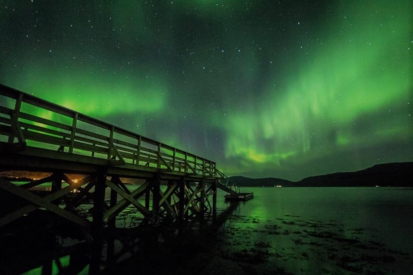
On Kvaløya outside Tromsø, Tromsø Friluftsenter takes guests away from the city lights for intimate Arctic evenings by the fjord, with the chance to watch the Northern Lights dance across the dark Norwegian sky. Photo © Tromsø Friluftsenter.

After a night beneath the aurora, Gargia Lodge offers a warm and welcoming base in the wilderness outside Alta, with just 11 en-suite rooms, a sauna, outdoor hot tub and easy access to some of northern Norway’s darkest skies. Photo: Gargia Lodge.

In the heart of the Lyngen Alps, guests at Lyngen Experience can head out beneath the aurora with renowned Northern Lights guide and photographer Kjetil Skogli, with the mountains and fjord providing a spectacular Arctic backdrop. Photo by Kjetil Skogli.

At Attme Have in Dyrøy, panoramic AuroraHuts turn the Northern Lights into part of the stay, letting guests watch the Arctic sky from the warmth of their bed while the fjord and mountains stretch out beyond the glass. Photo by Attme Have.

At Reinefjorden Sjøhus in Lofoten, guests can watch the Northern Lights sweep across the fjord and snow-covered mountains from the edge of one of Norway’s most dramatic Arctic landscapes. Photo: Kenan Hurdeniz, @oldkyrenian.

With Safartica, the journey into Finnish Lapland is part of the Northern Lights experience itself, as guests travel by snowmobile through snow-covered forest in search of dark skies and the aurora. Photo by Mikhail Sinitcyn.

At ICEHOTEL in Jukkasjärvi, every winter brings a new world of ice art, giving visitors another reason to head north before stepping outside in search of the Northern Lights. Photo by Joakim Norenius.

At Camp Ripan in Kiruna, a reindeer excursion through snow-covered Swedish Lapland is one of many ways to experience the Arctic landscape by day before turning attention to the Northern Lights after dark. Photo: Camp Ripan.

At Peace & Quiet Hotel near Jokkmokk, guests can sleep in an Aurora Hut on the frozen Lule River, with little between the warmth of the bed and the Northern Lights sweeping across the Swedish Lapland sky. Photo by Yasin Bayol.

Landhotel offers a warm, contemporary base in the open landscapes of South Iceland, perfectly placed for exploring by day and heading out beneath dark skies in search of the Northern Lights after sunset. Photo by Bragi Ljósmyndari.

Greenland in winter offers far more than the Northern Lights: colourful settlements, vast snowy landscapes, dog sledding and the Greenland Ice Sheet all form part of the experience, while clear nights bring the chance of seeing the aurora overhead. Photo: Visit Greenland – Unsplash.

In Luleå, the Northern Lights are only part of the winter adventure, with days spent out on the frozen landscape trying activities such as ice fishing before darkness returns to Swedish Lapland. Photo: Explore Luleå.

With Iceland Untouched, travellers can explore Iceland’s dramatic canyons, rivers and volcanic landscapes by day, before heading into the darkness in search of the Northern Lights after sunset. Photo: Iceland Untouched.
A streak of green above a frozen lake, a sudden ribbon of light over a Norwegian fjord, or a pale glow that gathers strength while everyone waits in the snow: seeing the northern lights is never quite the same twice. From northern Norway to Greenland, these are some of the places that make the waiting worthwhile.
There is a particular sort of silence that comes with looking for the northern lights. It may be broken by boots on snow, the crackle of a fire or the sound of a guide pouring coffee, but mostly there is waiting: looking north, checking the clouds, and wondering whether that faint grey shape above the horizon is about to become something more.
Then, sometimes, it does.
For all the forecasts, apps and carefully planned journeys, the aurora borealis remains reassuringly beyond anyone’s control. It can flare across the sky when little is expected, or stay hidden on a night when the forecast looked perfect. The best Northern Lights trip is therefore not simply about finding the point on a map with the highest probability. It is about choosing somewhere worth being while you wait.
Across the Nordic region, that leaves travellers spoilt for choice. Northern Norway combines aurora hunting with mountains and sea. Finnish Lapland turns the night sky into part of the architecture, with cabins and villas designed for watching from indoors. Swedish Lapland offers vast dark landscapes and the famously clear skies around Abisko. Iceland adds glaciers, volcanoes and geothermal pools to the equation, while Greenland strips the experience back to its Arctic essentials.
The northern lights may be the reason for travelling, but they rarely remain the whole story.
Northern Norway: following the weather
Tromsø has become one of Europe’s best-known gateways to the northern lights, and with good reason. It is easy enough to reach, lively enough to fill the hours before darkness falls, and surrounded by mountains, islands and fjords where artificial light quickly disappears.
Its other advantage is movement.
Cloud is often the real enemy of aurora watching. A strong display taking place above an unbroken layer of grey is no more visible than one happening on the other side of the world. Around Tromsø, guides can follow gaps in the weather towards the coast, into the valleys or sometimes well inland.
This is the world of the aurora chase. Tromsø Safari has made the northern lights a central part of its Arctic programme, while Amazing Arctic Tours specialises in taking guests away from the city in search of what its guides call the green gold of the Nordic sky.
At Tromsø Friluftsenter, on Kvaløya outside Tromsø, the connection is more personal. The family-run centre has spent years taking visitors into the darkness, combining local knowledge with the simple pleasure of being outside on an Arctic night.
“We want to share the uniqueness of this place with others − let them have an experience they can not find anywhere else.”
— Trine Risvik, Tromsø Friluftsenter
The appeal of Tromsø is not that the lights somehow behave better here. It is that there are people who have spent years learning where to go when they do not.
Yet northern Norway is far bigger than Tromsø.
East towards Alta, the landscape begins to feel more continental and the coastal weather loses some of its grip. At Gargia Fjellstue, just outside Alta, darkness arrives without much competition from streetlights. Here, the aurora is less an excursion from town and more part of winter life.
Closer to Tromsø, the Lyngen Alps rise steeply from the fjords. Lyngen Experience pairs Northern Lights outings with a setting of sharp mountains, sea and snow; the kind of landscape where even a quiet sky does not feel like a wasted evening.
Senja and Dyrøy offer a similar sense of distance without requiring an expedition to reach them. At Attme Have, small glass-fronted AuroraHuts sit close to the water, while Camp Solbergfjord looks out across the same dark coastal world.
There is something appealing about this alternative to the chase. Instead of spending the evening in a minibus following weather maps, the lights are allowed to arrive in their own time.
And then there is Lofoten.
In winter, its fishing villages, beaches and jagged mountains make one of the most recognisable landscapes in northern Europe feel entirely different. The weather can be wilful, but when the clouds clear, there are few more dramatic backdrops for the aurora.
At Black Aurora Nook, large windows open towards the landscape and the lights can be watched without leaving the house. Reinefjorden Sjøhus offers a more traditional base among the islands, while RIB-Lofoten takes the search onto the water.
Northern Norway suits those who want the aurora to sit alongside something else: a fishing village, whale watching, mountains, a winter road trip or simply the changing weather rolling in from the Norwegian Sea.
Finnish Lapland: let the lights come to you
Cross into Finnish Lapland and the mood changes.
The mountains largely give way to forest, frozen lakes and low fells. Roads disappear between snow-laden trees and, away from the larger resorts, darkness seems to begin almost at the doorstep.
Finland has also done something clever with aurora tourism. Instead of asking everyone to spend the evening outside looking up, many places have brought the sky into the room.
Glass roofs, wide windows and carefully positioned cabins are now part of the landscape of Lapland accommodation. At their worst, they can feel like a gimmick. At their best, they change the rhythm of the trip entirely.
Star Arctic Hotel sits high above Saariselkä and includes Aurora Glass Cabins built around views of the northern sky. Further north, Wilderness Hotels has developed its own version of the idea around Inari, where forests, lakes and very little artificial light do much of the work.
At Paadar Aurora Villas, beside Lake Paatari, terraces and outdoor hot tubs turn waiting into a rather more comfortable affair. Magical Pond near Kuusamo takes a quieter approach, placing compact accommodation among the trees with windows facing the sky.
Muonio, close to the Swedish border, is another place worth remembering. It sits in a sparsely populated part of western Lapland, with forest, fells and little light pollution. Nivunki Village has glass-fronted huts set among the trees, but the attraction here is as much what is outside them: reindeer, snow and long stretches of darkness.
Not every Finnish aurora experience involves staying still.
Safartica uses electric snowmobiles on some of its Northern Lights safaris, replacing much of the engine noise traditionally associated with snowmobile tours with the quieter sound of travelling through winter forest.
Around Ivalo and Inari, Ivalo Experiences brings another element into the evening by combining aurora hunting with reindeer and Sámi traditions.
That matters. The aurora is not simply a backdrop invented for tourism; people across the north have lived beneath it for generations, with stories, beliefs and ways of understanding the landscape that long pre-date tonight’s camera settings.
Further south, Rovaniemi makes an easy introduction to Lapland. Arctic TreeHouse Hotel frames forest and sky through broad windows, while the surrounding region has enough winter activities to prevent a cloudy night from feeling like a disaster.
Levi offers a similar balance of comfort and the outdoors. In autumn, before lakes freeze, there is the added chance of seeing the aurora twice: once above and once reflected in still water. Our feature on Levi captures that brief period when ruska colours, darkening nights and open water meet.
Finland is perhaps at its most convincing when nothing much needs to happen. A sauna, dinner, a walk through the snow and a window facing north can be quite enough.
Swedish Lapland: dark skies and wide horizons
Swedish Lapland has its own rhythm again.
The name most closely associated with aurora watching is Abisko, a small settlement near the Norwegian border surrounded by mountains and national park. Its position gives it an enviable reputation for clear skies, particularly when cloud hangs over surrounding areas.
Scan Magazine’s feature on the King’s Trail passes through the same landscape. In summer, hikers come for the trail; once the nights return, attention moves upwards.
East of Abisko lies Kiruna and, a little beyond it, Jukkasjärvi.
Here, ICEHOTEL has spent decades turning Arctic winter into art. Yet autumn can be just as interesting. ICEHOTEL’s Arctic autumn begins before the deep snow and darkest weeks arrive, when the first northern lights return and the landscape still carries traces of autumn colour.
By winter, the setting has changed entirely. Snow absorbs sound, the Torne River freezes and evenings can be combined with snowmobile trips, dog sledding and nights in rooms carved from ice. Our feature marking 35 years of ICEHOTEL follows that evolution.
Nearby, Camp Ripan offers another version of Kiruna winter, with its Aurora Spa and excursions beyond the lights of town.
The Swedish side of Lapland is also full of places that receive less international attention.
Around Luleå, winter extends out across the frozen Bothnian Bay. Ice & Light Village places clear-walled cabins in that landscape, while Explore Luleå combines aurora hunting with the wider experience of a northern coastal winter.
Near Jokkmokk, Peace & Quiet Hotel takes its name seriously. Its glass rooms sit apart in the landscape, with little between the bed and the dark sky outside.
Further into Laponia, Stora Sjöfallet is less about clever accommodation and more about space. The scale of the landscape becomes part of the experience: mountains, lakes and long stretches with barely a light on the horizon.
Swedish Lapland feels particularly well suited to anyone who wants darkness to be part of the holiday, rather than something encountered only on a booked evening tour.
Iceland: when the journey matters as much as the sky
Iceland asks for a different approach.
It lies further south than much of Lapland, and weather arriving quickly from the Atlantic can make aurora plans uncertain. But few people travel to Iceland with only one thing in mind.
A cloudy night may follow a day among waterfalls, black beaches, glaciers or steaming geothermal landscapes. If the sky clears after dinner, the northern lights feel like an addition rather than the sole measure of whether the trip has succeeded.
Getting away from Reykjavík makes an obvious difference.
In South Iceland, Landhotel sits in open countryside with very little light pollution, where guests can watch the sky from outside or from the warmth of the jacuzzi.
Further along the south coast, Hótel Kría in Vík offers a simple but valuable service: if the lights appear while guests are asleep, the hotel can wake them.
This sounds like a small detail until several evenings have been spent repeatedly checking the sky.
Private stays can turn the same idea into something more solitary. Hrafntinna Villa looks out across open countryside, with a hot tub and wide windows that make staying in as tempting as going out.
For travellers who prefer somebody else to think about roads, weather and timings, Iceland Encounter builds tailored journeys through the country, allowing an aurora evening to sit naturally among Iceland’s other landscapes.
Iceland may require flexibility, but that is part of its charm. Plans change here. Roads turn, weather moves in and the evening may end somewhere entirely different from where it began.
Greenland: fewer lights below, more sky above
Greenland changes the scale once again.
There are no long drives from one town to the next and no dense network of winter resorts. Settlements sit between mountains, sea and ice, connected by aircraft, boats and, in winter, local routes across the snow.
For aurora watchers, Kangerlussuaq stands out.
Its inland position brings unusually dry conditions, making clear winter skies one of its great advantages. The settlement lies beneath the auroral oval, while its small size means darkness is never far away.
Our winter guide to Greenland places the northern lights alongside another attraction that is difficult to ignore here: the Greenland Ice Sheet.
On the west coast, Sisimiut offers a different combination. At Hotel Sisimiut, the aurora forms part of a winter landscape that also includes dog sledding, snowmobiling and mountains immediately beyond town.
Further north, Ilulissat adds icebergs to the view. Hotel Arctic sits overlooking Disko Bay, where a dark winter sky can meet ice and sea in the same frame.
Greenland demands more effort than a weekend in Tromsø or a flight-and-transfer trip to Finnish Lapland. That is precisely its attraction. The northern lights belong here to a landscape that feels vast even before darkness arrives.
So, where is best?
There is no useful single answer.
For a first Northern Lights trip with plenty of organised tours and the possibility of moving to find clearer skies, Tromsø remains difficult to beat.
For nights built around silence, forest and accommodation designed for watching the sky, Finnish Lapland has mastered the art.
For clear northern skies and deep Arctic landscapes, Abisko, Kiruna and Swedish Lapland deserve their reputation.
For travellers who want the lights as part of a road trip filled with other natural sights, Iceland makes sense.
And for those prepared to travel further for a quieter and more remote Arctic experience, Greenland has few equivalents.
The better question may be what kind of place you want to wake up in the following morning.
When to go
Darkness, rather than cold or snow, sets the Northern Lights season. Across the far north, viewing generally begins in late August or September and continues into March or April.
Autumn brings dark nights without the deepest winter cold, while February and March offer a good balance of daylight for daytime activities and darkness after sunset.
Clear skies matter more than the month. Even a strong aurora is invisible behind cloud, which is why staying several nights gives you a much better chance than relying on a single evening. Dark surroundings help too, especially when the display is faint.
And that unpredictability is part of the appeal. Sometimes the lights arrive as a faint green arc; sometimes the whole sky seems to move.
The places featured here are only a selection. Explore more travel stories, stays and experiences from across the Nordic countries in the Scan Magazine archive.
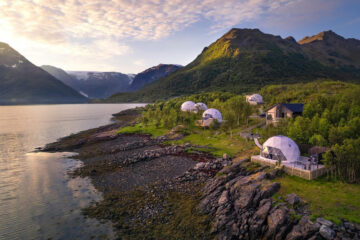
In Jøkelfjord, North of Norway, Isbreen the Glacier gives visitors an exclusive front-seat view of nature’s most dramatic performances: the blue and…
In the heart of Lofoten, where the mountains plunge into the Vestfjord, the historic fishing village of Ure has been reborn. Today, food, nature and…

Looking for an Icelandic hotel that offers easy access to popular destinations and a peaceful, cosy getaway from the bustle of life? Look no further…
Are you a keen follower of Brand Scandinavia? Sign up to our newsletter now to stay up to date on all the latest Scandi trends, read celebrity interviews and get insider advice on the most cherished hidden gems.
